Online learning has transformed education. Today, students can access courses from world-class universities, learn new skills from experts around the globe, and study almost any subject without leaving their homes. The flexibility and accessibility of online education have created opportunities that were unimaginable just a few decades ago.
However, online learning also presents unique challenges.
Unlike traditional classrooms, online environments often require greater self-discipline, focus, and responsibility. Learners must manage their own schedules, avoid distractions, and retain information without the structure provided by face-to-face instruction. As a result, many students discover that simply watching videos or reading online materials is not enough to create lasting learning.
One of the biggest challenges is memory retention. Information encountered online can be forgotten quickly if it is not processed and reviewed effectively.
Fortunately, research in cognitive psychology and Learning Science has identified several strategies that can significantly improve memory in online learning environments. By applying these techniques consistently, learners can retain more information, improve understanding, and make their study time far more productive.
In this guide, we’ll explore the most effective memory strategies for online learning and explain how to use them in practice.
Why Online Learning Creates Memory Challenges
Online learning offers convenience, but it also creates conditions that can make memory formation more difficult.
In traditional classrooms, learners often benefit from social interaction, structured schedules, immediate feedback, and physical learning environments designed for concentration. Online learners frequently study alone while surrounded by distractions such as notifications, social media, emails, and household interruptions.
Additionally, many online courses encourage passive consumption. Students may watch videos for hours without actively engaging with the material. Although this creates familiarity, it often produces weaker memory than active learning.
Understanding these challenges is the first step toward overcoming them.
Memory improves when learners deliberately create opportunities for attention, engagement, and retrieval.
Focus on Active Learning, Not Passive Watching
One of the most common mistakes in online learning is treating educational content like entertainment.
Watching videos may feel productive, but learning requires more than exposure to information. The brain remembers information more effectively when it actively processes it.
Instead of simply watching a lesson, pause regularly and ask yourself:
- What was the main idea?
- Can I explain this concept in my own words?
- How does this connect to previous knowledge?
- What examples can I think of?
These questions encourage deeper processing and strengthen memory formation.
The goal is to participate in learning rather than merely observe it.
Use Active Recall After Every Lesson
Active recall is one of the most effective memory strategies available.
After completing an online lesson, close your notes and attempt to recall the most important information from memory. Write down key concepts, definitions, examples, and insights without looking at the material.
This simple exercise strengthens retrieval pathways and reveals areas that require additional review.
For example, after finishing a video lecture, spend five minutes answering questions such as:
- What were the main points?
- What concepts do I remember?
- What was the most important idea?
Retrieval strengthens memory far more effectively than immediately replaying the lesson.
Apply Spaced Repetition
Many online learners review information only once before moving on to the next lesson.
Unfortunately, this approach allows forgetting to occur rapidly.
Spaced repetition combats forgetting by scheduling reviews over time. Instead of reviewing information repeatedly in one session, revisit it after increasing intervals.
A simple schedule might include:
- Review after one day
- Review after three days
- Review after one week
- Review after two weeks
- Review after one month
Each review strengthens memory and improves long-term retention.
The spacing effect is one of the most well-established findings in Learning Science.
Take Effective Notes
Good note-taking plays a crucial role in online learning.
Because online courses often involve large amounts of information, organized notes help learners capture important concepts and create resources for future review.
However, effective note-taking is not about writing everything down.
Focus on:
- Key ideas
- Important examples
- Definitions
- Questions
- Connections between concepts
Using methods such as Cornell Notes or Mind Mapping can improve both organization and retention.
Well-designed notes transform online lessons into lasting learning resources.
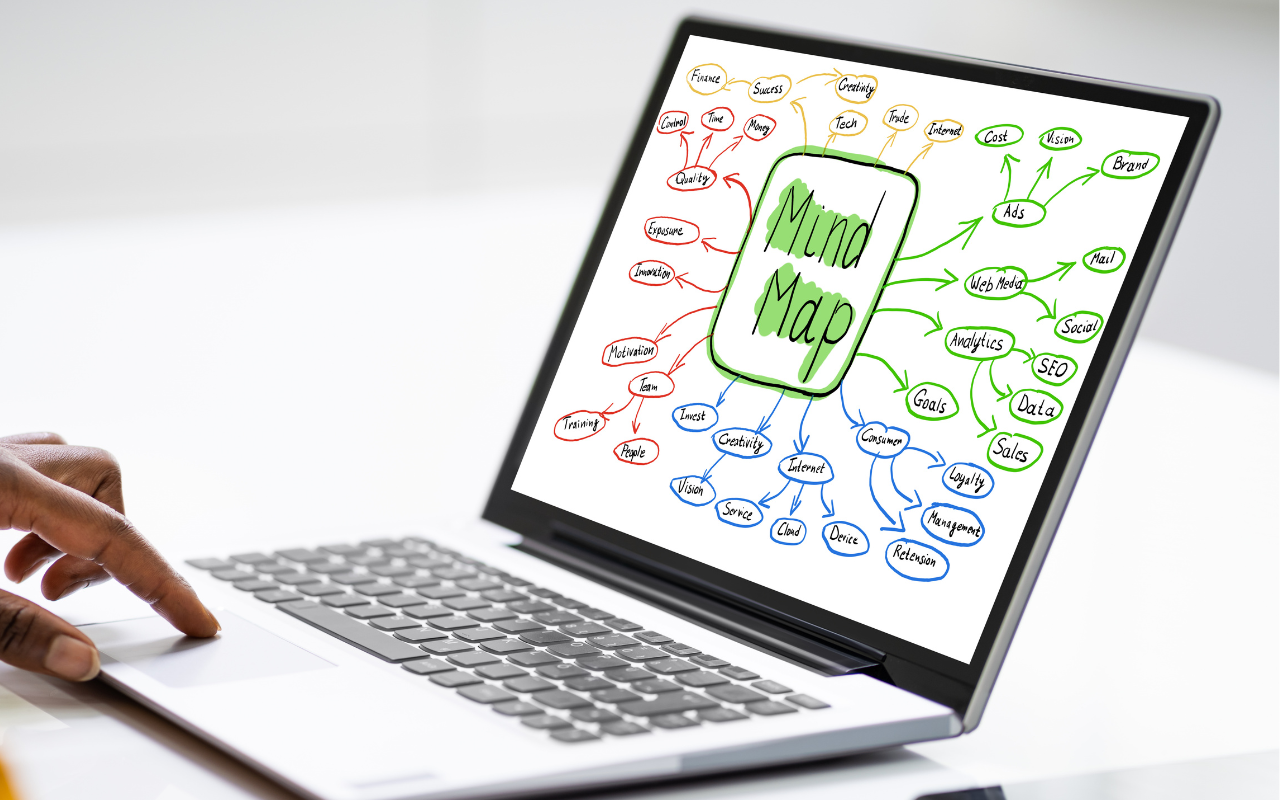
Use Mind Maps to Organize Information
Mind maps are particularly useful for online learning because they help learners visualize relationships between concepts.
After completing a module or course section, create a mind map that organizes the information into categories and subtopics.
This process encourages active thinking and helps reveal connections that may not be obvious during passive review.
Mind maps also support dual coding by combining verbal and visual representations of information.
As a result, learners often find it easier to remember complex topics.
Create Self-Tests
One of the best ways to improve memory is to test yourself regularly.
Instead of waiting for formal assessments, create your own questions after each lesson.
Examples include:
- Multiple-choice questions
- Short-answer questions
- Flashcards
- Practice problems
- Discussion prompts
Self-testing forces retrieval and strengthens long-term memory.
Research consistently shows that retrieval practice is more effective than passive review for retaining information over time.
Testing yourself should be viewed as a learning activity, not merely an evaluation activity.
Eliminate Digital Distractions
Attention is essential for memory formation.
Unfortunately, online learning environments often compete with numerous distractions. Notifications, social media, emails, and unrelated websites can interrupt concentration and weaken learning.
To improve memory:
- Turn off notifications
- Close unnecessary browser tabs
- Use focus modes
- Study in a quiet environment
- Schedule dedicated learning sessions
Reducing distractions allows the brain to devote more resources to processing and storing information.
Focused attention improves both comprehension and retention.
Teach What You Learn
Teaching is one of the most effective memory strategies because it combines retrieval, organization, and explanation.
After completing an online lesson, try teaching the material to someone else. If no audience is available, explain it aloud to yourself.
The process of teaching reveals gaps in understanding and strengthens memory by requiring active recall.
Many learners discover that concepts become significantly clearer once they attempt to explain them.
If you can teach it, you probably understand it.
Connect New Information to Existing Knowledge
The brain remembers connected information more effectively than isolated facts.
Whenever you learn something new online, ask yourself how it relates to what you already know.
For example:
- Does it remind you of another concept?
- Does it support or contradict previous knowledge?
- Can you apply it to a real-world situation?
Building associations creates stronger memory networks and improves retrieval.
Learning becomes easier when new information has a place within existing knowledge structures.
Review Before Starting New Lessons
Many online learners move directly from one lesson to the next without reviewing previous material.
A more effective approach is to spend a few minutes reviewing key concepts before beginning a new lesson.
This practice:
- Strengthens existing memories
- Activates prior knowledge
- Improves comprehension of new material
- Creates continuity between learning sessions
Even brief reviews can produce significant memory benefits over time.
Learning is cumulative, and review helps maintain those connections.
Use Flashcards Strategically
Flashcards are particularly effective for online learning because they combine active recall and spaced repetition.
They work especially well for:
- Vocabulary
- Definitions
- Formulas
- Dates
- Key concepts
However, flashcards should not be limited to simple memorization.
Questions that require explanation and understanding often produce stronger learning than those requiring only recognition.
Well-designed flashcards encourage meaningful retrieval rather than mechanical repetition.
Prioritize Sleep and Recovery
Online learners often study late at night, especially when balancing education with work or personal responsibilities.
While flexibility is one of the advantages of online learning, sacrificing sleep can harm memory.
During sleep, the brain consolidates newly learned information and strengthens memory traces.
Research consistently shows that adequate sleep improves:
- Retention
- Concentration
- Learning efficiency
- Recall performance
Memory formation continues long after a study session ends.
Common Memory Mistakes in Online Learning
Several habits frequently undermine memory in online education.
Common mistakes include:
- Binge-watching lessons without review
- Multitasking during study sessions
- Relying solely on passive review
- Taking poor-quality notes
- Avoiding self-testing
- Neglecting spaced repetition
- Studying while distracted
Recognizing these mistakes can help learners develop more effective habits.
Often, improving memory involves changing how information is studied rather than increasing study time.
Building an Effective Online Learning Routine
The most successful online learners create systems rather than relying on motivation alone.
A strong routine may include:
- Focused study sessions
- Active note-taking
- Daily retrieval practice
- Weekly review sessions
- Spaced repetition
- Regular self-testing
These habits work together to strengthen memory and improve long-term retention.
Consistency is usually more important than intensity.
Small actions performed regularly produce lasting results.
Conclusion
Online learning offers incredible opportunities, but it also requires learners to take greater responsibility for their own memory and learning processes. Simply watching videos and reading materials is rarely enough to create durable knowledge.
Strategies such as active recall, spaced repetition, self-testing, effective note-taking, mind mapping, focused attention, and teaching others can dramatically improve memory retention in online learning environments. These techniques are supported by decades of research and align closely with how the brain learns and remembers information.
For students, professionals, and lifelong learners, the message is clear: successful online learning depends not only on access to information but also on how that information is processed, reviewed, and retrieved. By applying evidence-based memory strategies consistently, learners can retain more knowledge, learn more efficiently, and achieve better results from every online course they take.