Mind mapping has become one of the most popular visual learning techniques in education, business, and personal development. Students use mind maps to prepare for exams, professionals rely on them to organize projects, and lifelong learners often turn to them when trying to understand complex subjects. But does mind mapping actually improve memory, or is it simply a more attractive way to take notes?
The answer lies in cognitive science. Over the past several decades, researchers have explored how the human brain processes, stores, and retrieves information. While the brain remains incredibly complex, scientists have discovered several principles that explain why visual learning methods such as mind mapping can be so effective. Rather than forcing information into long linear notes, mind maps organize knowledge in a way that closely resembles how the brain naturally forms connections between ideas.
Understanding the science behind mind mapping can help learners use this technique more effectively and appreciate why it often leads to better comprehension and long-term retention.
How Human Memory Actually Works
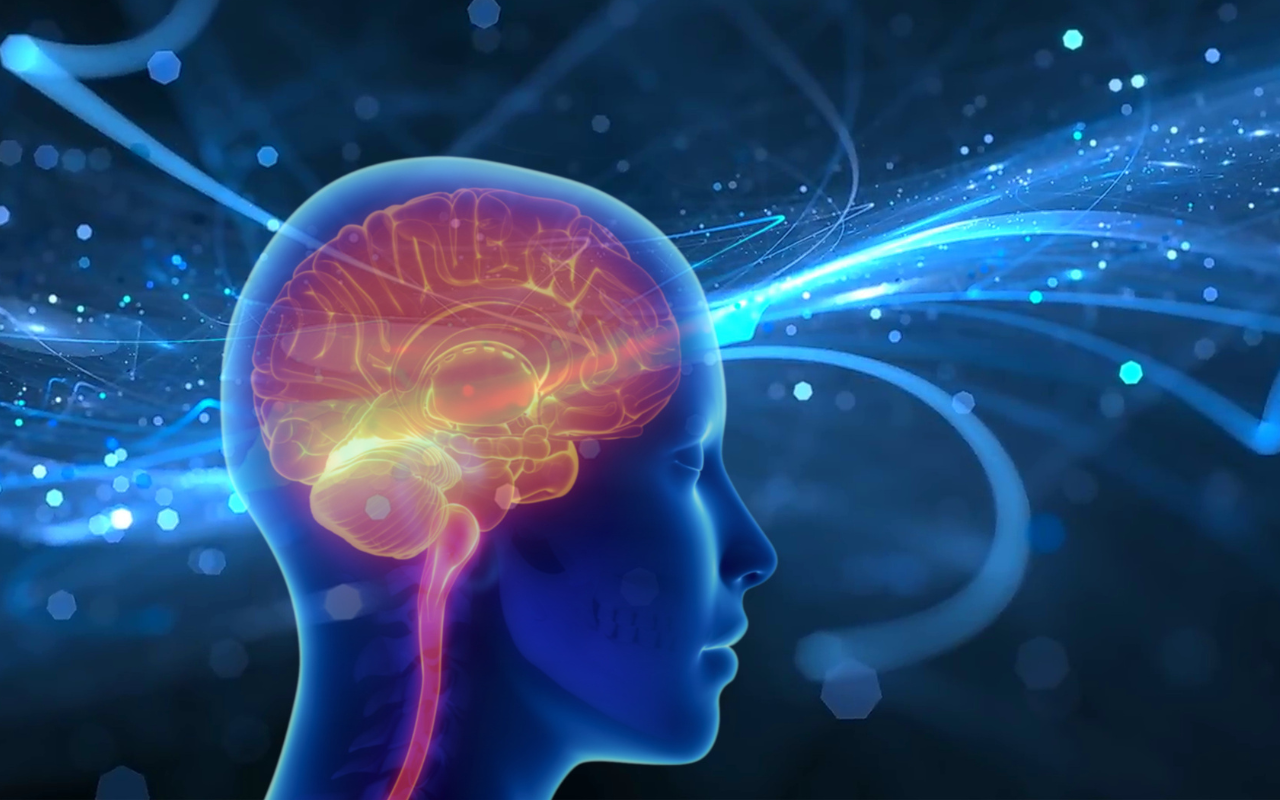
To understand why mind maps are powerful, it is important to understand how memory functions. Contrary to popular belief, the brain does not store information like files in a computer. Instead, memories are built through networks of interconnected neurons. Whenever we learn something new, the brain creates associations between pieces of information and links them to existing knowledge.
The stronger these connections become, the easier it is to retrieve information later. This is why remembering a familiar concept often triggers memories of related ideas. Learning is not simply about collecting facts; it is about building meaningful relationships between those facts.
Traditional note-taking methods often present information in a linear sequence. While this can be useful for recording information, it does not always reflect the associative structure of human memory. Mind maps, on the other hand, are designed around connections, categories, and relationships, making them more compatible with the brain’s natural learning processes.
The Power of Association
One of the most important principles in memory science is association. The brain remembers information more effectively when it can connect new knowledge to existing knowledge. The more connections a memory has, the more pathways exist for retrieving it later.
Mind maps encourage associative thinking by organizing information into branches and sub-branches. Instead of viewing concepts as isolated pieces of information, learners can immediately see how ideas relate to one another. A student studying biology, for example, can connect anatomy, physiology, cellular processes, and body systems within a single visual structure.
This interconnected format mirrors the way neural networks operate, helping learners build stronger mental frameworks rather than isolated memories.
Dual Coding Theory and Visual Learning
One of the most influential explanations for the effectiveness of mind mapping comes from Dual Coding Theory, developed by psychologist Allan Paivio. According to this theory, people process information through two primary channels: a verbal system and a visual system.
When information is presented only as text, learners rely primarily on verbal processing. However, when information combines words with visual elements, both systems become engaged. This creates multiple memory pathways, increasing the likelihood that information will be remembered later.
Mind maps naturally take advantage of dual coding. They combine keywords, visual layouts, colors, symbols, and sometimes images into a single learning tool. Instead of relying solely on written language, learners create a richer mental representation of the material. As a result, recalling information often becomes easier because the brain has multiple routes available for accessing the same memory.
Cognitive Load and Information Organization
Another scientific concept that helps explain the effectiveness of mind mapping is Cognitive Load Theory. Human working memory has limited capacity. When too much information is presented at once, the brain becomes overwhelmed, making learning less efficient.
Traditional notes often contain dense paragraphs filled with information. While detailed, these notes can place a heavy burden on working memory because learners must constantly search for relationships between ideas.
Mind maps reduce cognitive load by organizing information visually. Major concepts are separated into branches, subtopics are grouped logically, and relationships are immediately visible. This structure allows learners to process information more efficiently because the organizational work has already been built into the map itself.
Instead of spending mental energy figuring out how concepts relate, learners can focus their attention on understanding and remembering the content.
Chunking: Why Smaller Units Improve Memory
Memory researchers have long known that the brain remembers information more effectively when it is organized into chunks. Chunking refers to the process of grouping individual pieces of information into larger meaningful units.
A classic example is remembering a phone number. Most people find it easier to remember a number divided into groups than a long string of digits. The same principle applies to learning.
Mind maps naturally encourage chunking by dividing information into categories and subcategories. A large topic becomes a collection of smaller, manageable units. Rather than attempting to memorize an entire chapter at once, learners can focus on individual branches and then understand how those branches connect to the larger structure.
This process makes complex information less intimidating and significantly improves retention.
Active Learning and Deeper Processing
Research consistently shows that active learning produces better results than passive learning. Reading a textbook or highlighting sentences may feel productive, but these activities often involve relatively shallow processing.
Creating a mind map requires active engagement. Learners must identify key concepts, determine relationships, prioritize information, and decide how ideas should be organized. This process forces the brain to interact with the material in a meaningful way.
Psychologists often refer to this as deep processing. The deeper learners engage with information, the more likely they are to retain it over time. Mind mapping encourages exactly this kind of cognitive effort, transforming learners from passive recipients of information into active participants in the learning process.
Spatial Memory and Visual Organization
Humans possess remarkable spatial memory abilities. In fact, researchers believe that spatial memory played a crucial role in human survival long before the invention of written language. Remembering locations, routes, and environmental features was essential for finding food, avoiding danger, and navigating unfamiliar territory.
Mind maps take advantage of this natural strength by placing information within a spatial structure. Ideas occupy specific locations on the page, and learners often remember where information was positioned within the map.
Many students experience this phenomenon when reviewing a mind map. Instead of recalling information solely as words, they remember that a particular concept appeared on the upper-right branch or near a specific image. These spatial cues provide additional retrieval pathways that can improve recall during exams and problem-solving situations.
The Role of Colors and Images
Visual elements contribute significantly to memory retention. Research has shown that distinctive information is often easier to remember than information that blends into the background. This phenomenon, sometimes called the Von Restorff Effect, suggests that unusual or visually striking items attract more attention and are therefore more memorable.
Mind maps frequently use colors, icons, symbols, and images to differentiate categories and emphasize important concepts. These visual distinctions help information stand out, making it easier to encode and retrieve later.
While colors alone do not guarantee better learning, they can enhance organization and create visual landmarks that support memory. When combined with meaningful content and logical structure, visual elements become powerful learning aids.
What Research Says About Mind Mapping
Numerous studies have examined the educational benefits of mind mapping. While results vary depending on the subject, learner, and implementation method, research generally suggests that mind mapping can improve comprehension, knowledge organization, and memory retention when compared to some traditional note-taking approaches.
Researchers have found that learners often perform better when they actively organize information into meaningful structures rather than simply copying notes. Mind maps appear particularly useful for subjects that involve large amounts of interconnected information, such as science, medicine, history, and language learning.
Importantly, mind mapping is not a magic solution. Its effectiveness depends on thoughtful use and active engagement. Simply creating colorful diagrams without understanding the underlying material is unlikely to produce significant learning benefits.
Why Mind Mapping Works for Long-Term Retention
Long-term memory formation depends on more than repetition. Information must be encoded effectively, connected to existing knowledge, and revisited over time. Mind mapping supports all three of these processes.
The technique encourages meaningful organization, strengthens associations between concepts, engages both verbal and visual processing systems, and promotes active learning. Together, these factors create stronger memory traces that are more resistant to forgetting.
When learners review a mind map, they are not simply rereading information. They are revisiting a structured network of ideas that reflects how knowledge is stored in the brain. This makes retrieval more efficient and often improves long-term retention.
Conclusion
The effectiveness of mind mapping is supported by several well-established principles from cognitive science. By leveraging association, dual coding, chunking, active learning, spatial memory, and visual organization, mind maps align closely with the way the human brain naturally processes information.
While no learning technique works equally well for everyone, mind mapping offers a scientifically grounded approach to organizing knowledge and improving memory retention. Its ability to transform complex information into clear visual structures makes it a valuable tool for students, professionals, and lifelong learners alike.
The science is clear: when information is organized visually, connected meaningfully, and actively processed, learning becomes more efficient and memories become stronger. Mind mapping brings all of these elements together, making it one of the most powerful visual learning techniques available today.