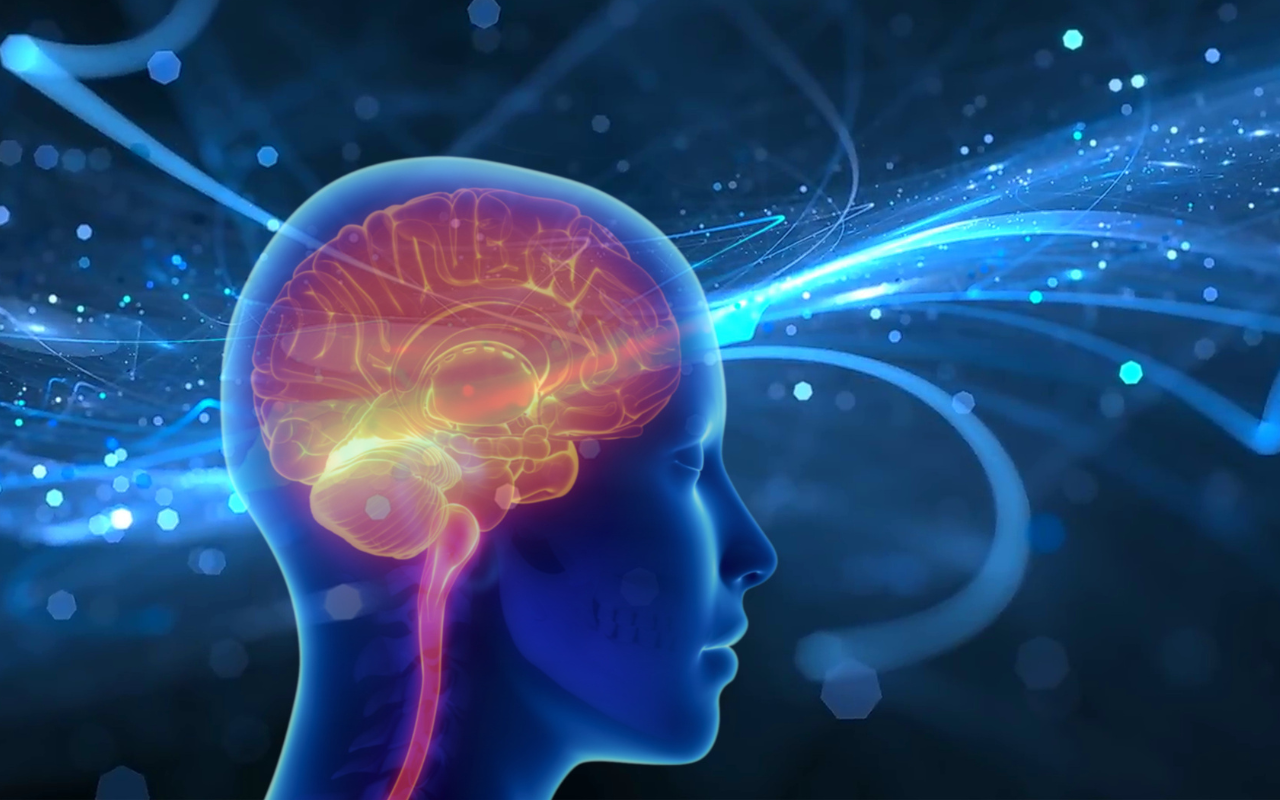
Most people believe that having a good memory is something you’re born with. Some individuals seem capable of remembering names, dates, facts, and details effortlessly, while others struggle to recall information they studied only a few days earlier. However, modern research in psychology and neuroscience suggests that memory is not simply a natural talent. In many cases, it is a skill that can be improved through the use of effective strategies.
Memory experts, top students, language learners, and even world memory champions rarely rely on repetition alone. Instead, they use specific techniques that help the brain encode, organize, and retrieve information more efficiently. These methods take advantage of how memory naturally works, making learning faster and recall more reliable.
The good news is that these techniques are not reserved for experts. Anyone can learn them and apply them to studying, work, personal development, or everyday life. In this guide, we’ll explore ten proven memory techniques that have been supported by research and used successfully by learners around the world.
1. The Memory Palace Technique
The Memory Palace, also known as the Method of Loci, is one of the oldest and most powerful memory techniques ever developed. It dates back to ancient Greece and remains widely used by memory competitors today.
The technique involves mentally placing information in familiar locations. You might imagine walking through your home and assigning pieces of information to different rooms. Later, when you need to remember the information, you mentally revisit those locations and retrieve the stored items.
This method works because humans possess strong spatial memory abilities. We often remember places and routes more easily than abstract information. By attaching information to locations, recall becomes significantly easier.
2. Visualization
The human brain processes visual information remarkably well. In fact, images are often remembered more easily than words because they create stronger mental impressions.
Visualization involves transforming information into vivid mental pictures. Instead of trying to memorize a word, concept, or fact directly, you create a mental image that represents it. The more unusual, exaggerated, or emotionally engaging the image becomes, the more memorable it tends to be.
Students learning vocabulary, professionals remembering presentations, and language learners expanding their knowledge frequently benefit from this simple but highly effective technique.
3. Chunking
Working memory has limited capacity. Trying to remember long strings of information can quickly become overwhelming. Chunking solves this problem by grouping smaller pieces of information into larger, meaningful units.
A common example is a phone number. Most people find it easier to remember a number divided into sections than one long sequence of digits.
The same principle applies to studying. Instead of memorizing dozens of isolated facts, learners organize information into categories, patterns, or themes. This reduces cognitive load and improves retention.
4. Mnemonic Devices
Mnemonics are memory aids that help simplify complex information through patterns, acronyms, rhymes, or memorable phrases.
Students often use mnemonics to remember lists, sequences, formulas, and classifications. A simple phrase can serve as a retrieval cue that unlocks a larger body of information.
The effectiveness of mnemonics comes from their ability to transform abstract information into something meaningful and easy to recall. Because they create additional associations, they make retrieval faster and more reliable.
5. Story Linking
The human brain is naturally drawn to stories. Throughout history, stories have been used to pass knowledge from one generation to the next because they are easier to remember than disconnected facts.
Story linking involves creating a narrative that connects multiple pieces of information. If you need to remember a list of items, you can imagine them interacting within a vivid story.
The story does not need to be realistic. In fact, unusual, humorous, or absurd stories are often more memorable because they attract attention and create stronger mental images.
6. Spaced Repetition
One of the most scientifically supported memory techniques is spaced repetition. Rather than reviewing information repeatedly in a short period, learners review it at carefully spaced intervals over time.
This approach is based on research related to the forgetting curve, which shows that information is gradually forgotten unless it is revisited. Reviewing material just before it is likely to be forgotten strengthens memory and improves long-term retention.
Many modern learning platforms, including language-learning applications and flashcard systems, incorporate spaced repetition because of its proven effectiveness.
7. Active Recall
Many students spend hours rereading notes, highlighting textbooks, and reviewing information passively. While these activities may feel productive, they are often less effective than active recall.
Active recall requires learners to retrieve information from memory without looking at the answer. Instead of rereading notes, a student attempts to remember concepts, definitions, or explanations independently.
This retrieval process strengthens neural pathways and improves memory retention. Research consistently shows that active recall is one of the most effective learning strategies available.
8. Association Techniques
Memory improves when new information is connected to knowledge that already exists. Association techniques take advantage of this principle by linking unfamiliar information to familiar concepts.
For example, when learning a new name, you might connect it to someone you already know or associate it with a visual image. These connections create additional retrieval pathways that make information easier to remember.
The more meaningful and personal the association becomes, the stronger the memory tends to be.
9. The Peg System
The Peg System is a structured memory technique often used for memorizing lists and sequences. It involves creating a set of mental “pegs” that serve as permanent reference points.
Information is then attached to these pegs through vivid visual associations. Once the peg system is learned, new information can be linked to it quickly and efficiently.
Although it requires some initial practice, the Peg System can be remarkably effective for remembering ordered information, presentations, and large collections of facts.
10. Teaching What You Learn
One of the most overlooked memory techniques is teaching. Explaining information to another person forces the brain to organize knowledge clearly and identify gaps in understanding.
When you teach a concept, you are actively retrieving information, simplifying it, and connecting ideas in a meaningful way. This process strengthens memory and deepens comprehension.
Even if no other person is available, pretending to teach a topic aloud can produce similar benefits. Many learners discover that information becomes significantly easier to remember after explaining it in their own words.
Why These Techniques Work
Although these methods appear different on the surface, they share several underlying principles. Most memory techniques improve learning by increasing attention, creating associations, encouraging visualization, promoting active engagement, or strengthening retrieval pathways.
The brain remembers meaningful information more effectively than random information. Memory techniques transform abstract facts into structured experiences that are easier to encode and retrieve.
They also encourage deeper processing. Rather than passively reviewing information, learners actively interact with the material, which improves long-term retention.
Choosing the Right Technique
Not every memory technique works equally well for every situation. The best method often depends on the type of information being learned.
For example, the Memory Palace is particularly useful for speeches, lists, and large amounts of structured information. Visualization works well for vocabulary and concepts. Spaced repetition is ideal for long-term learning, while active recall supports exam preparation.
Many successful learners combine multiple techniques. A language student might use visualization, association, active recall, and spaced repetition simultaneously. Combining methods often produces better results than relying on a single strategy.
Common Mistakes to Avoid
One mistake many learners make is expecting memory techniques to work instantly. Like any skill, they require practice. The first few attempts may feel awkward, but performance typically improves quickly with consistent use.
Another mistake is focusing on memorization without understanding. Memory techniques work best when information is understood first and then reinforced through strategic encoding.
Finally, learners should avoid using techniques passively. The effectiveness comes from actively creating images, stories, associations, and retrieval opportunities.
Conclusion
Memory is not simply a matter of talent or intelligence. It is heavily influenced by the strategies we use to process information. The most successful learners rarely rely on repetition alone. Instead, they use proven techniques that help the brain encode, organize, and retrieve information more effectively.
Methods such as the Memory Palace, visualization, chunking, mnemonics, story linking, spaced repetition, active recall, association techniques, the Peg System, and teaching can dramatically improve learning and retention. Each technique offers unique advantages, and many work even better when combined.
By experimenting with these methods and incorporating them into your learning routine, you can remember information more efficiently, study more effectively, and develop stronger long-term memory skills. The key is not having a perfect memory—it is learning how to use the brain’s natural strengths to your advantage.