Have you ever noticed how much easier it is to remember a diagram, chart, or image than an entire page of text? This is not a coincidence. The human brain is naturally designed to process visual information quickly and efficiently, making visual learning one of the most powerful strategies for acquiring and retaining knowledge.
In today’s world, students and professionals are constantly exposed to large amounts of information. The challenge is no longer finding information but remembering and applying it effectively. This is where visual learning can make a significant difference.
Visual learning uses images, diagrams, mind maps, charts, color coding, and other visual tools to improve understanding and memory. By transforming abstract ideas into visual representations, learners can process information more efficiently, maintain focus for longer periods, and strengthen long-term retention.
In this article, we’ll explore how visual learning improves memory, enhances concentration, and helps learners retain information more effectively.
What Is Visual Learning?
Visual learning is a learning approach that relies on visual elements to communicate information. Rather than depending solely on reading or listening, visual learners use images, graphics, diagrams, symbols, and spatial relationships to understand concepts.
This approach is widely used in education, business, science, and professional training because it simplifies complex information and makes it easier to understand.
Examples of visual learning tools include:
- Mind maps
- Flowcharts
- Concept maps
- Infographics
- Diagrams
- Visual notes
- Graphs and charts
- Educational videos
- Color-coded study materials
These tools help learners organize information visually, creating stronger mental connections between ideas.
Why the Brain Responds So Well to Visual Information
The effectiveness of visual learning is closely linked to how the human brain processes information.
A significant portion of the brain is dedicated to visual processing. Every second, our eyes send vast amounts of information to the brain, which quickly identifies patterns, shapes, colors, and relationships.
Visual information is often processed faster than written language because images can communicate multiple ideas simultaneously. A single diagram can explain a complex system that might otherwise require several paragraphs of text.
When learners see information presented visually, they are more likely to create meaningful mental connections. These connections improve understanding and make information easier to retrieve later.
This ability to connect concepts visually is one of the main reasons visual learning supports memory and retention.
How Visual Learning Improves Memory
Memory depends on the brain’s ability to encode, store, and retrieve information. Visual learning strengthens each stage of this process.
Stronger Encoding
Encoding is the process of converting information into a form that the brain can store.
Visual content tends to be more memorable because it creates vivid mental representations. When learners see an image, diagram, or visual framework, they often associate it with existing knowledge, making the information easier to encode.
For example, a student studying the water cycle may remember a diagram showing evaporation, condensation, and precipitation more easily than a written explanation alone.
The visual representation creates a mental image that serves as a memory cue.
Better Organization of Information
The brain remembers information more effectively when it is organized.
Visual learning tools such as mind maps and concept maps help learners structure information logically. Instead of memorizing isolated facts, learners can see relationships between ideas.
This organized structure helps the brain store information more efficiently and retrieve it when needed.
Improved Recall
Memory retrieval becomes easier when information has multiple associations.
Visual elements act as memory triggers. A color, shape, diagram, or symbol can instantly activate related information stored in memory.
This is why many people can remember a chart they saw weeks ago while struggling to recall a paragraph they read yesterday.
How Visual Learning Enhances Focus
Maintaining focus is one of the biggest challenges in modern learning environments.
With constant notifications, distractions, and information overload, many learners struggle to stay engaged with traditional study materials.
Visual learning helps address this problem in several ways.
Increased Engagement
Visual content naturally captures attention.
The brain is highly responsive to images, colors, and patterns. Compared to long blocks of text, visual materials often feel more engaging and easier to process.
When learners are interested in what they are studying, they are more likely to remain focused and absorb information effectively.
Reduced Cognitive Overload
Cognitive overload occurs when the brain receives more information than it can efficiently process.
Large amounts of text can overwhelm learners, especially when studying unfamiliar topics.
Visual representations simplify complex information by highlighting key concepts and relationships. This reduces mental effort and allows learners to focus on understanding rather than decoding information.
Better Attention Management
Visual learning often encourages active participation.
Creating mind maps, drawing diagrams, and organizing visual notes require learners to engage directly with the material.
This active involvement helps maintain concentration and reduces passive learning behaviors that often lead to distraction.
How Visual Learning Improves Information Retention
Retention refers to the ability to keep information in memory over time.
Many learners understand information during a study session but forget it shortly afterward. Visual learning helps solve this problem by strengthening long-term memory formation.
Creating Multiple Memory Pathways
One reason visual learning is effective is that it supports multiple forms of memory.
When learners combine text, images, colors, and spatial organization, they create several pathways to the same information.
The more pathways that exist, the easier it becomes to retrieve information later.
Encouraging Meaningful Learning
Retention improves when learners understand information rather than simply memorizing it.
Visual learning encourages learners to identify relationships, patterns, and structures. This deeper level of processing helps move information from short-term memory into long-term memory.
Supporting Long-Term Recall
Visual memories tend to remain accessible for longer periods.
Many people can easily remember the layout of a map, the appearance of a diagram, or the structure of a mind map long after studying it.
These visual memories often provide powerful retrieval cues that support long-term retention.
Practical Visual Learning Techniques
Anyone can benefit from incorporating visual learning into their study routine.
Here are some of the most effective techniques.
Mind Mapping
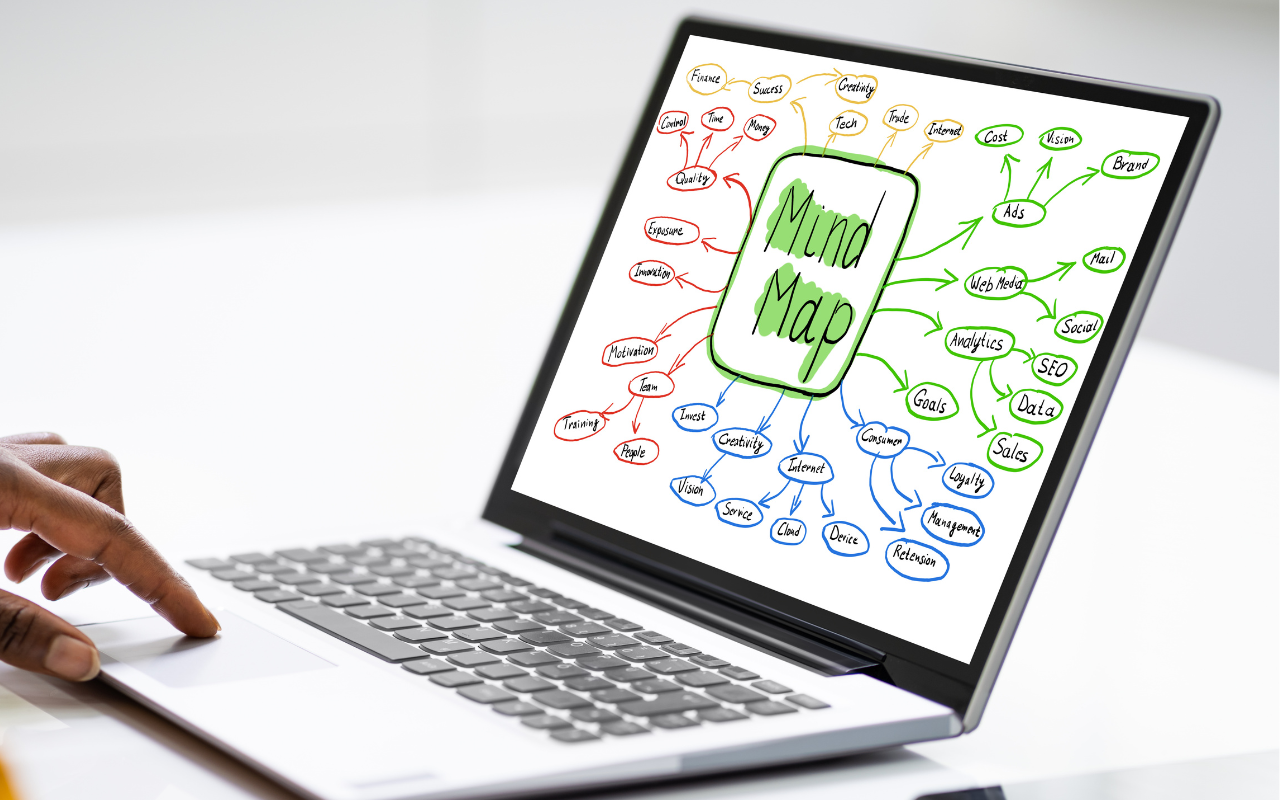
Mind maps organize information around a central idea and connect related concepts through branches.
This method helps learners see the bigger picture while understanding how individual concepts relate to one another.
Color Coding
Using different colors for categories, topics, or levels of importance improves organization and recall.
Color creates additional memory cues that support information retrieval.
Visual Note-Taking
Visual notes combine text, symbols, diagrams, and simple illustrations.
This approach makes note-taking more engaging while improving understanding and retention.
Concept Mapping
Concept maps focus on relationships between ideas.
They are particularly useful for subjects that involve systems, processes, and interconnected concepts.
Infographics
Infographics summarize information visually using images, icons, charts, and concise text.
They are effective for reviewing large amounts of information quickly.
Who Benefits Most from Visual Learning?
Although visual learning can help nearly everyone, certain groups may benefit particularly strongly.
Students
Visual learning helps students understand difficult subjects, organize study materials, and prepare for exams more effectively.
Professionals
Professionals use visual frameworks to solve problems, communicate ideas, and manage projects.
Visual tools can improve productivity and decision-making across many industries.
Self-Learners
Individuals pursuing independent learning often use visual techniques to master new skills and retain information more efficiently.
Teams and Organizations
Businesses frequently use visual communication methods to improve collaboration, training, and knowledge sharing.
Combining Visual Learning with Other Study Methods
While visual learning is powerful, it becomes even more effective when combined with other evidence-based learning strategies.
For example:
- Active Recall helps strengthen memory retrieval.
- Spaced Repetition improves long-term retention.
- The Feynman Technique enhances understanding.
- Practice Testing identifies knowledge gaps.
Visual learning provides a strong foundation, while these additional methods reinforce learning and memory.
The most successful learners often combine multiple approaches rather than relying on a single technique.
Conclusion
Visual learning is far more than simply using pictures during study sessions. It is a powerful approach that aligns with the brain’s natural ability to process and organize information visually.
By improving memory encoding, increasing focus, reducing cognitive overload, and strengthening long-term retention, visual learning helps students and professionals learn more effectively.
Whether through mind maps, diagrams, visual notes, concept maps, or color-coded systems, visual learning transforms information into formats that are easier to understand and remember.
As information continues to grow in volume and complexity, the ability to learn visually will become increasingly valuable. By incorporating visual learning techniques into your daily routine, you can improve comprehension, enhance memory, maintain focus, and achieve better learning outcomes in both academic and professional environments.