In today’s information-driven world, learning efficiently has become more important than ever. Whether you’re a student preparing for exams, a professional acquiring new skills, or a lifelong learner exploring new subjects, the ability to understand and retain information can significantly impact your success.
One learning approach that has gained increasing attention is visual learning. From mind maps and diagrams to infographics and videos, visual learning helps people process information through images and visual structures rather than relying solely on text or spoken explanations.
But what exactly is visual learning, and why does it seem so effective for so many people?
In this comprehensive guide, we’ll explore the concept of visual learning, how it works, its benefits, practical techniques, and how students and professionals can use it to improve comprehension, memory, and overall learning performance.
What Is Visual Learning?
Visual learning is a learning method that uses visual elements to help individuals understand, organize, and remember information. Instead of focusing exclusively on reading text or listening to lectures, visual learners benefit from seeing concepts represented through images, diagrams, charts, graphs, symbols, maps, and other visual formats.
The basic principle behind visual learning is simple: the human brain processes visual information quickly and efficiently. Visual representations often make complex information easier to understand because they reveal patterns, relationships, and structures that may be difficult to identify in plain text.
Visual learning is not limited to a specific age group or profession. Students, teachers, researchers, engineers, designers, business professionals, and even medical practitioners regularly use visual methods to enhance learning and problem-solving.
How the Brain Processes Visual Information
To understand why visual learning is effective, it’s helpful to look at how the brain processes information.
Research in cognitive science suggests that the brain processes visual information significantly faster than written text. In fact, a large portion of the human brain is dedicated to visual processing. When we see an image, our brains can quickly recognize shapes, colors, relationships, and patterns.
Visual information often engages multiple cognitive processes simultaneously. For example, when studying a diagram of the human heart, a learner can see the structure, understand the relationships between parts, and create mental associations that support long-term memory.
This process is often connected to the concept of dual coding, a theory suggesting that information is easier to remember when presented through both verbal and visual channels. When learners combine words with images, they create multiple pathways for memory retrieval.
As a result, visual learning can improve understanding, retention, and recall compared to relying on text alone.
Benefits of Visual Learning
Visual learning offers numerous advantages for both academic and professional development.
Improved Memory Retention
One of the most significant benefits of visual learning is improved memory. Images tend to be more memorable than text because they create stronger mental associations. Visual representations make information easier to recall, especially during exams, presentations, or problem-solving situations.
Faster Understanding
Complex concepts can often be understood more quickly through diagrams, flowcharts, and visual models. Instead of reading several paragraphs of explanation, learners can grasp key ideas through a single visual representation.
Better Organization of Information
Visual tools help organize information in a structured way. Mind maps, concept maps, and visual frameworks allow learners to see connections between ideas, making it easier to understand larger topics.
Increased Engagement
Visual content is often more engaging than long blocks of text. Images, diagrams, and visual notes can maintain attention and reduce cognitive fatigue during study sessions.
Enhanced Problem-Solving
Visual thinking helps individuals analyze situations, identify patterns, and generate creative solutions. This is particularly valuable in fields such as business, engineering, design, and science.
Common Visual Learning Techniques
There are many practical ways to incorporate visual learning into daily study and work routines.
Mind Mapping
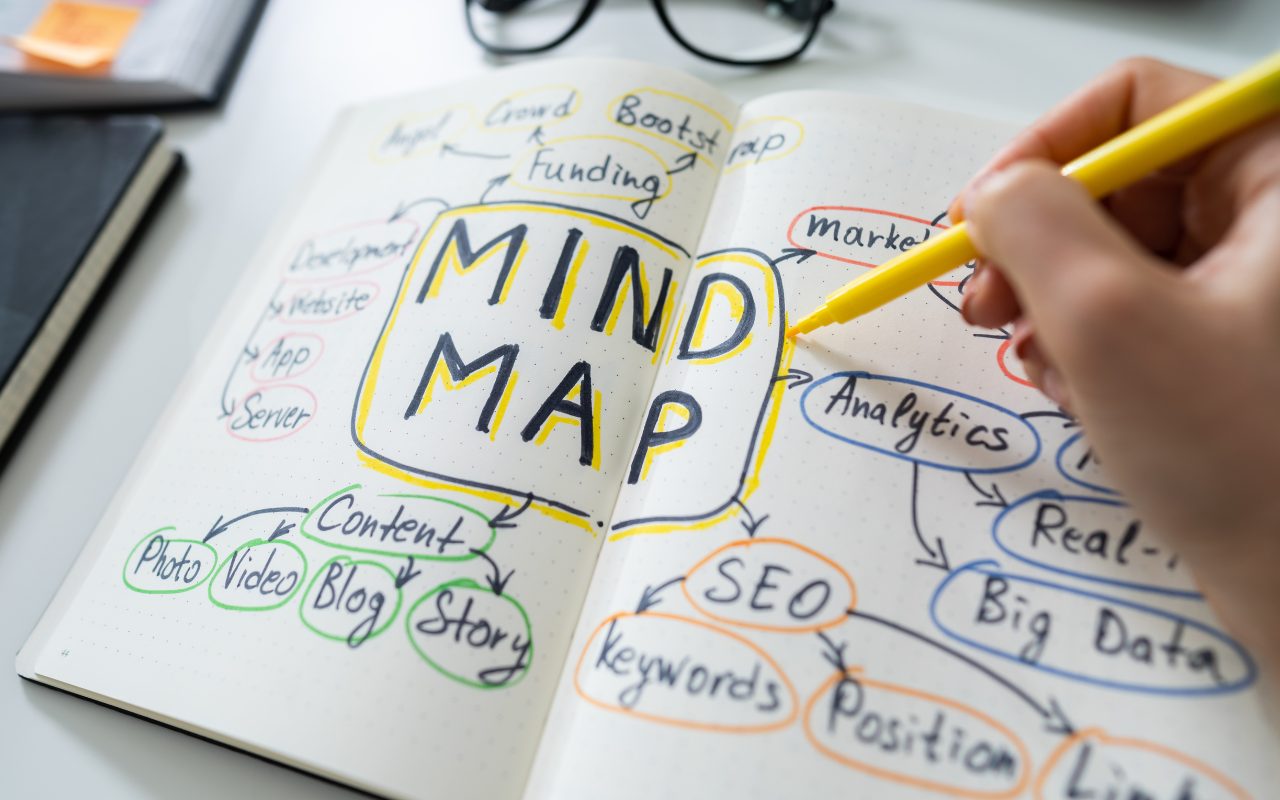
Mind mapping is one of the most popular visual learning techniques. A mind map starts with a central topic and branches out into related ideas. This method helps learners organize information hierarchically and visualize relationships between concepts.
Concept Mapping
Concept maps are similar to mind maps but focus more on showing connections between ideas. They are particularly useful for understanding complex subjects that involve multiple relationships and processes.
Diagrams and Flowcharts
Diagrams and flowcharts simplify complex systems and procedures. They help learners understand sequences, structures, and workflows by presenting information visually.
Color Coding
Using colors to categorize information can improve organization and recall. Different colors can represent different topics, priorities, or levels of importance.
Visual Note-Taking
Visual note-taking combines words, symbols, arrows, and simple drawings to create more engaging and memorable notes. This technique is often referred to as sketchnoting.
Infographics
Infographics present information through a combination of text, images, charts, and visual design. They are highly effective for summarizing complex information in a concise format.
Who Can Benefit from Visual Learning?
Visual learning can benefit nearly everyone, regardless of age or profession.
Students
Students often use visual learning techniques to prepare for exams, understand difficult subjects, and improve memory retention. Subjects such as biology, history, chemistry, and mathematics can become easier to understand through visual representations.
Professionals
Professionals frequently use diagrams, presentations, charts, and visual frameworks to communicate ideas, solve problems, and manage projects. Visual learning can improve productivity and decision-making in the workplace.
Lifelong Learners
Individuals who enjoy self-education can use visual learning to acquire new skills more efficiently. Whether learning a language, studying personal finance, or exploring technology, visual methods can accelerate understanding.
Teams and Organizations
Businesses often use visual communication tools to train employees, share information, and facilitate collaboration. Visual systems help teams process information more effectively and align around shared goals.
Visual Learning vs Traditional Learning
Traditional learning methods often rely heavily on reading, listening, and memorization. While these approaches can be effective, they may not always be the most efficient way to process complex information.
Visual learning complements traditional methods by providing additional ways to understand and remember content. Rather than replacing reading or listening, visual learning works best when integrated with other evidence-based learning strategies.
For example, a student studying biology might read a textbook chapter, watch an instructional video, create a mind map, and then use active recall to test understanding. Combining multiple learning methods often produces better results than relying on a single approach.
Common Mistakes in Visual Learning
Although visual learning can be highly effective, some mistakes can reduce its benefits.
One common mistake is focusing too much on design and not enough on understanding. A visually attractive diagram is not useful if it does not accurately represent the information.
Another mistake is creating overly complex visuals. Too many colors, symbols, and connections can create confusion rather than clarity.
Some learners also spend excessive time creating visual materials instead of actively reviewing and applying the information. Visual learning should support learning, not become a distraction from it.
Finally, visual learning works best when combined with active study techniques such as practice questions, active recall, and spaced repetition.
Conclusion
Visual learning is a powerful approach that helps individuals understand, organize, and remember information more effectively. By using visual tools such as mind maps, diagrams, concept maps, color coding, and visual notes, learners can transform complex information into clear and meaningful representations.
The growing popularity of visual learning is supported by cognitive science, which shows that the brain is highly efficient at processing visual information. Whether you’re a student preparing for exams, a professional developing new skills, or a lifelong learner pursuing personal growth, visual learning can help improve comprehension, memory retention, and overall learning performance.
As educational methods continue to evolve, the ability to think visually and organize knowledge through visual systems will become increasingly valuable. By incorporating visual learning techniques into your daily routine, you can learn faster, retain more information, and unlock your full learning potential.