Many students spend hours reading textbooks, highlighting notes, and reviewing materials, only to discover that they remember far less than they expected. The problem is often not a lack of effort but a lack of effective study strategies. Traditional study methods frequently encourage passive learning, where information is consumed but not deeply processed. As a result, students may struggle to understand complex concepts, retain information for exams, or connect ideas across different topics.
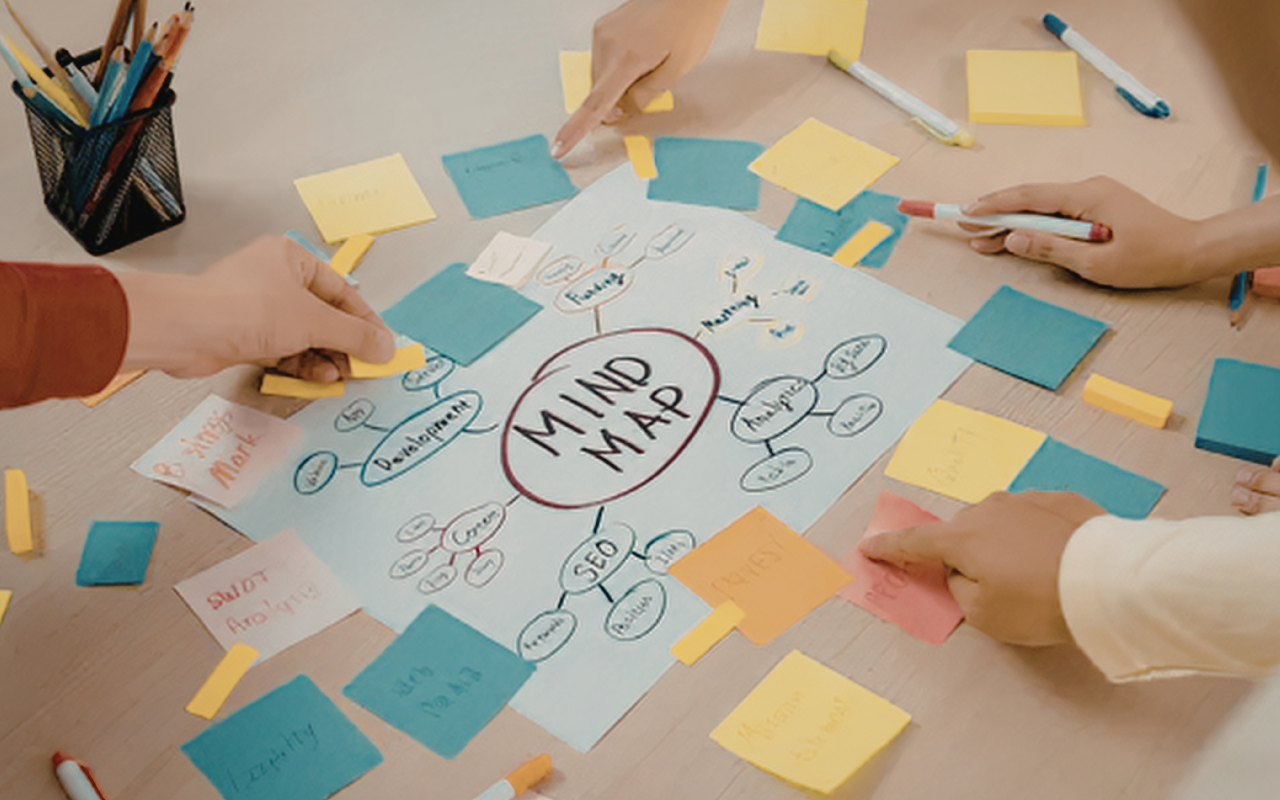
Mind mapping offers a different approach. Instead of organizing information in long lists or dense paragraphs, mind maps transform knowledge into visual structures that reflect how the brain naturally processes information. By combining keywords, connections, colors, and spatial organization, mind maps help students engage more actively with what they are learning.
Whether studying for a high school exam, preparing for university courses, or learning new skills independently, students can use mind maps to improve comprehension, strengthen memory retention, and make studying more efficient. Understanding how to use this technique correctly can turn overwhelming subjects into clear and manageable learning experiences.
Why Traditional Studying Often Falls Short
Many common study habits focus heavily on repetition. Students reread chapters, copy notes, and highlight important sections, believing that spending more time with the material will automatically improve learning. While repetition has value, research in cognitive psychology suggests that passive review is often less effective than active learning strategies.
When students simply reread information, they may experience an illusion of competence. The material feels familiar because they have seen it multiple times, but familiarity is not the same as understanding. During an exam, many students discover that recognizing information on a page is much easier than recalling it from memory.
Mind maps encourage active engagement because students must identify key concepts, organize information, and build meaningful connections between ideas. This process requires deeper thinking, which strengthens learning and improves long-term retention.
How Mind Maps Improve Learning
One of the greatest strengths of mind mapping is its ability to transform large amounts of information into an organized visual structure. Instead of viewing a subject as hundreds of disconnected facts, students begin to see patterns, categories, and relationships.
For example, a student studying biology may create a mind map that connects cells, tissues, organs, and body systems. Rather than memorizing isolated definitions, the student develops a broader understanding of how these concepts interact. This deeper understanding often makes information easier to remember because knowledge becomes part of an interconnected framework.
Mind maps also reduce cognitive overload. Complex subjects can feel overwhelming when presented as long chapters filled with information. By breaking content into branches and sub-branches, mind maps create manageable learning units that are easier to process and review.
Using Mind Maps Before Reading
Many students think mind maps should only be created after studying a topic, but they can also be valuable before reading. Creating a simple pre-reading mind map helps establish a framework for learning.
Before opening a textbook chapter, students can write the main topic in the center of a page and add major headings as branches. This creates a visual roadmap of the material. As new information is encountered, students can place it into the appropriate sections of the map.
This approach helps learners focus on the structure of the content rather than becoming lost in details. It also encourages active reading because students are constantly looking for information that fits into the developing map.
Taking Notes with Mind Maps
Traditional notes often become pages of text that are difficult to review later. Important ideas may be buried among less relevant details, making revision time-consuming and frustrating.
Mind mapping offers a more efficient note-taking method. During lectures, classes, or reading sessions, students can capture key concepts using branches and keywords rather than full sentences. Main ideas become major branches, while supporting details are added as sub-branches.
This format helps students focus on understanding rather than transcription. Instead of trying to write down every word, they learn to identify what is truly important. As a result, the notes become more organized and easier to review.
Using Mind Maps for Exam Preparation
One of the most popular uses of mind mapping is exam preparation. As exam dates approach, students often face the challenge of reviewing large amounts of information from multiple chapters or subjects.
Mind maps help solve this problem by providing a condensed visual summary of key concepts. Instead of reviewing dozens of pages of notes, students can study a single page that captures the essential structure of a topic.
Creating revision mind maps is particularly effective because the process itself reinforces learning. Each time students organize information, identify relationships, and reconstruct concepts from memory, they strengthen their understanding. Reviewing these maps before an exam can also improve recall because the visual structure acts as a memory cue.
Improving Memory Through Active Recall
One of the most effective learning techniques supported by research is active recall. Rather than simply reviewing information, active recall requires students to retrieve knowledge from memory without looking at their notes.
Mind maps can be used to practice active recall in several ways. A student might cover parts of a completed map and attempt to recreate missing branches from memory. Another approach is to start with a blank page and rebuild an entire map after studying a topic.
This process forces the brain to retrieve information actively, which strengthens memory much more effectively than passive review. Over time, repeated retrieval helps transfer knowledge into long-term memory.
Using Mind Maps for Different Subjects
Mind maps are flexible enough to support almost any academic subject. In science courses, they can be used to visualize systems, processes, and relationships between concepts. In history, they help organize events, causes, consequences, and historical figures. In language learning, they are useful for vocabulary development, grammar structures, and communication skills.
Mathematics students can use mind maps to connect formulas, problem-solving methods, and key principles. Literature students can organize themes, characters, plots, and literary devices within a single visual framework.
Because mind maps emphasize relationships rather than isolated facts, they are especially valuable in subjects that require understanding rather than simple memorization.
Combining Mind Maps with Other Study Techniques
Mind mapping is powerful on its own, but it becomes even more effective when combined with evidence-based study methods.
For example, students can use mind maps alongside spaced repetition, reviewing maps at increasing intervals over time. They can also combine mind mapping with active recall by recreating maps from memory. Practice testing can be enhanced by using mind maps to identify weak areas that need additional review.
Rather than replacing all other study techniques, mind maps work best as part of a broader learning strategy that encourages understanding, retrieval, and long-term retention.
Digital vs. Handwritten Mind Maps for Students
Many students wonder whether digital or handwritten mind maps are better. The answer often depends on personal preference and learning goals.
Handwritten mind maps encourage active processing because students physically create the structure themselves. The act of writing and drawing branches may improve engagement and memory for some learners.
Digital mind maps offer advantages such as easy editing, collaboration, and organization. Students working on large projects or complex subjects may appreciate the flexibility of digital tools. Applications such as XMind, MindMeister, Coggle, and Miro allow users to expand and modify maps without running out of space.
Both approaches can be highly effective. The most important factor is not the format but the quality of the thinking involved in creating the map.
Common Mistakes Students Should Avoid
While mind mapping is a powerful study tool, certain mistakes can reduce its effectiveness. One common error is including too much information. A mind map should summarize and organize knowledge, not replicate an entire textbook chapter.
Another mistake is relying on mind maps as decorative projects rather than learning tools. Excessive focus on colors and design can distract from understanding the content itself. Students should also avoid creating maps passively by copying information without thinking critically about how concepts connect.
The most effective mind maps are clear, organized, and focused on meaningful relationships between ideas.
Building a Study Routine with Mind Maps
Students often achieve the best results when mind mapping becomes a regular part of their study routine. Instead of creating maps only before exams, they can use them throughout the learning process. A mind map created after each lesson, chapter, or study session gradually builds a complete visual overview of the subject.
Over time, this collection of maps becomes a personalized knowledge system. Reviewing these maps regularly helps reinforce learning and reduces the need for last-minute cramming before exams.
Consistency is more important than perfection. Even simple mind maps created regularly can provide significant benefits for learning and memory.
Conclusion
Mind mapping is far more than a creative note-taking technique. When used effectively, it becomes a powerful learning tool that helps students organize information, understand complex subjects, strengthen memory retention, and study more efficiently.
By transforming information into visual structures, mind maps encourage active learning and make it easier to see relationships between concepts. They can be used before reading, during note-taking, throughout revision, and as part of exam preparation. Combined with techniques such as active recall and spaced repetition, mind maps can significantly improve academic performance.
For students looking to study smarter rather than simply study longer, mind mapping offers a practical, science-backed method for turning information into lasting knowledge.