Preparing for exams can be one of the most stressful parts of being a student. As exam dates approach, learners often find themselves facing hundreds of pages of notes, textbooks, presentations, and assignments. Trying to review such a large amount of information in a limited period of time can feel overwhelming, especially when important concepts seem disconnected or difficult to remember.
Many students respond by rereading notes, highlighting textbooks, or cramming information the night before an exam. While these methods may create a sense of productivity, research suggests that they are often less effective than active learning strategies that require students to organize, retrieve, and apply information.
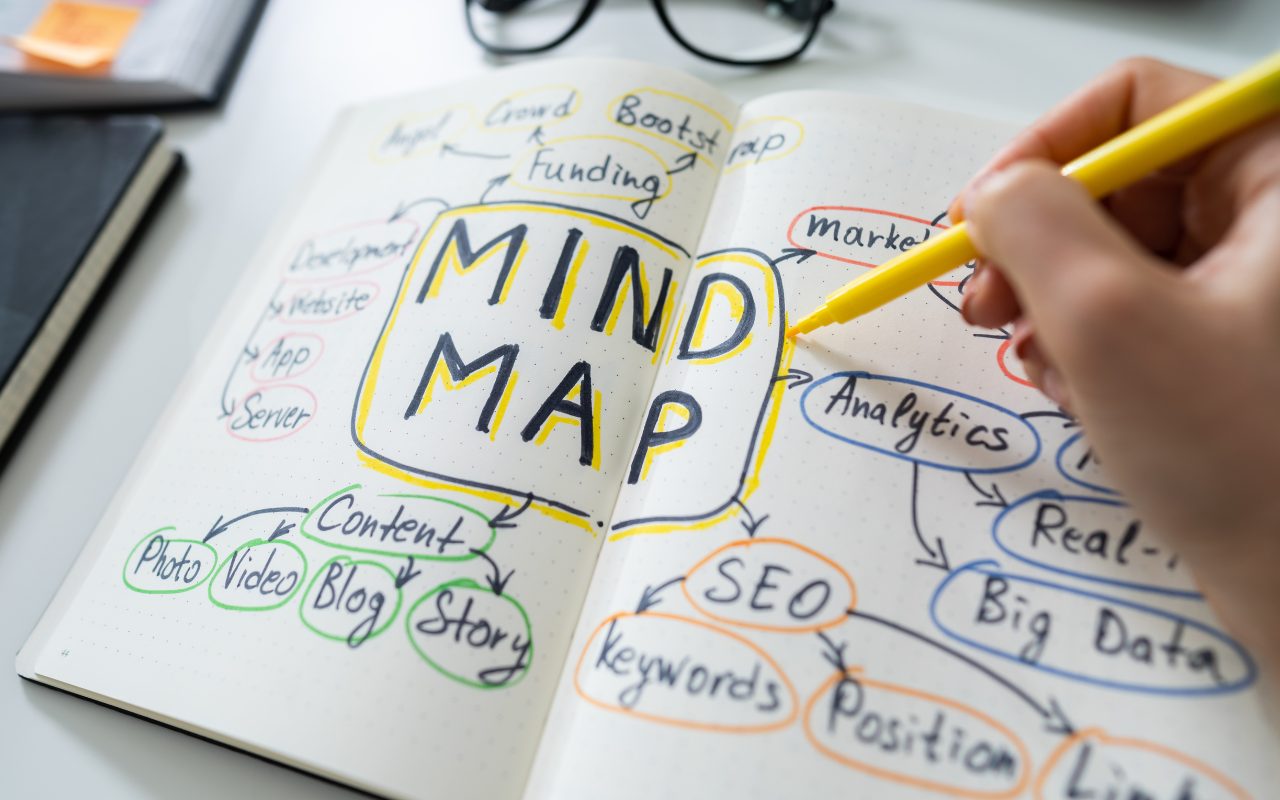
Mind mapping offers a powerful alternative. By transforming large amounts of information into visual structures, mind maps help students identify key concepts, understand relationships between topics, and review material more efficiently. Instead of memorizing isolated facts, learners create a clear overview of an entire subject, making exam preparation more organized and less stressful.
In this guide, you’ll learn how to use mind maps effectively throughout the exam preparation process and why this technique can improve both understanding and memory retention.
Why Mind Maps Are Effective for Exam Preparation
One of the biggest challenges during exam preparation is managing information overload. Most exams require students to remember numerous concepts, definitions, processes, formulas, and relationships. Traditional notes often present this information in a linear format, making it difficult to see how ideas connect.
Mind maps solve this problem by organizing information visually. The central topic sits at the center of the page, while major concepts branch outward into smaller categories and supporting details. This structure allows students to view an entire chapter or subject on a single page.
Because the brain naturally learns through associations, mind maps often make information easier to understand and recall. Rather than reviewing disconnected pieces of information, students see the bigger picture and develop stronger mental connections between concepts.
This combination of organization, visualization, and active learning makes mind mapping particularly useful during exam preparation.
Start Creating Mind Maps Early
One common mistake students make is waiting until a few days before the exam to organize their study materials. Effective exam preparation begins long before the test date arrives.
Ideally, students should create mind maps while learning the material. After completing a chapter, attending a lecture, or finishing a study session, they can summarize the most important concepts in a mind map. This approach gradually builds a collection of visual summaries that become extremely valuable during revision periods.
Creating maps throughout the learning process also improves understanding because students must actively identify key ideas and organize them into meaningful categories. By the time exams arrive, much of the organizational work has already been completed.
Create One Mind Map per Major Topic
A common question students ask is whether they should create one large mind map for an entire subject or multiple smaller maps.
In most cases, smaller maps are more effective. Each major topic should have its own dedicated mind map. For example, a biology student might create separate maps for:
- Cell Structure
- Genetics
- Human Anatomy
- Ecology
- Evolution
This approach prevents overcrowding and makes review sessions more manageable. It also allows students to focus on specific topics that require additional attention.
When necessary, smaller maps can be linked together through common themes and concepts, creating a larger network of knowledge without overwhelming a single page.
Focus on Understanding, Not Copying
One of the greatest advantages of mind mapping is that it encourages active learning. However, this benefit disappears if students simply copy information from textbooks without thinking about it.
The goal is not to reproduce every sentence from the source material. Instead, students should identify the core ideas, determine how they relate to one another, and organize them logically.
For example, rather than copying an entire paragraph about photosynthesis, a student might create branches for:
- Light Energy
- Chlorophyll
- Carbon Dioxide
- Glucose Production
- Oxygen Release
This process forces deeper engagement with the material and promotes better comprehension.
Use Keywords Instead of Full Sentences
Effective mind maps rely on keywords rather than long blocks of text. Keywords make information easier to scan and encourage active recall because the brain must reconstruct the meaning behind each concept.
When reviewing for an exam, students can quickly move through a map filled with concise labels. Long sentences, on the other hand, slow down the review process and make the map resemble traditional notes.
Using keywords also helps maintain visual clarity. A clean and organized mind map is far more effective than one crowded with excessive text.
Turn Mind Maps into Revision Tools
Many students think that creating the mind map is the final step. In reality, the most important benefits often come during review sessions.
Once a mind map is complete, it becomes a powerful revision tool. Students can use it to refresh their memory, identify weak areas, and review entire topics quickly. Because the information is visually organized, revision tends to be more efficient than rereading large amounts of text.
Some students even place completed maps on walls, study boards, or digital devices for quick daily reviews. Frequent exposure reinforces learning and keeps important concepts fresh in memory.
Combine Mind Maps with Active Recall
Research consistently shows that active recall is one of the most effective learning strategies available. Active recall involves retrieving information from memory without looking at study materials.
Mind maps can be used to support active recall in several ways. A student might cover sections of a completed map and attempt to reconstruct the missing branches. Another approach is to create a blank page and rebuild the entire map from memory.
This process reveals what the student truly knows and highlights areas that require additional study. Every successful retrieval strengthens memory, making information easier to recall during the actual exam.
Use Mind Maps with Spaced Repetition
Spaced repetition is another evidence-based learning technique that works exceptionally well alongside mind mapping. Rather than reviewing material repeatedly in a short period, students revisit information at increasing intervals over time.
A simple schedule might involve reviewing a mind map:
- One day after creation
- Three days later
- One week later
- Two weeks later
- One month later
Each review strengthens the memory trace and reduces forgetting. Because mind maps condense large topics into visual summaries, they are particularly well suited for spaced repetition sessions.
Identify Knowledge Gaps Quickly
One of the hidden benefits of mind mapping is its ability to reveal weaknesses in understanding. When students attempt to create a mind map, they often discover areas where they cannot explain a concept clearly or connect it to other ideas.
These gaps become immediately visible. Instead of discovering weaknesses during the exam, students can address them while studying. This targeted approach saves time because attention is focused on the topics that need improvement.
As the exam approaches, students can prioritize revision based on the areas that appear weakest within their mind maps.
Using Mind Maps for Different Types of Exams
Mind maps can be adapted to nearly any subject or exam format.
For science exams, they help organize systems, processes, formulas, and cause-and-effect relationships. For history exams, they can connect events, timelines, historical figures, and consequences. For language exams, mind maps are useful for vocabulary, grammar structures, and communication skills.
Even subjects that involve problem-solving, such as mathematics or economics, can benefit from mind maps. Students can organize formulas, methods, concepts, and common problem types into a structured visual framework.
Regardless of the subject, the goal remains the same: transform complex information into a format that is easier to understand and remember.
Avoid Common Exam Preparation Mistakes
While mind mapping is highly effective, students should avoid several common mistakes. One of the most frequent errors is creating maps that are too detailed. When every fact is included, the map becomes cluttered and loses its value as a summary tool.
Another mistake is spending excessive time decorating the map. Colors and visual elements can improve organization, but they should support learning rather than distract from it.
Students should also avoid creating mind maps passively. The learning benefits come from actively analyzing, organizing, and connecting information. Simply copying notes into branches will not produce the same results.
Building a Mind Mapping Exam Strategy
The most successful students often integrate mind mapping into a complete exam preparation strategy. They create maps while learning new material, review them regularly through spaced repetition, and use active recall to test their understanding.
As the exam date approaches, these mind maps become concise visual summaries of the entire course. Instead of feeling overwhelmed by stacks of notes, students can focus on clear, organized representations of the most important concepts.
This approach reduces stress, improves efficiency, and creates stronger long-term memories.
Conclusion
Mind mapping is one of the most effective tools students can use for exam preparation. By organizing information visually, encouraging active learning, and supporting evidence-based techniques such as active recall and spaced repetition, mind maps help transform complex subjects into manageable learning structures.
Rather than relying solely on passive review methods, students can use mind maps to understand relationships between concepts, identify knowledge gaps, and reinforce memory over time. The result is not only better exam performance but also deeper and more lasting learning.
For students seeking a smarter way to prepare for exams, mind mapping offers a practical, flexible, and scientifically supported solution that can make studying both more effective and less stressful.